What happens when the weather we are trying to predict is unlike anything in the data used to train the model?
This is one of the biggest questions facing the next generation of AI-powered weather forecasting, and it matters particularly for Africa.
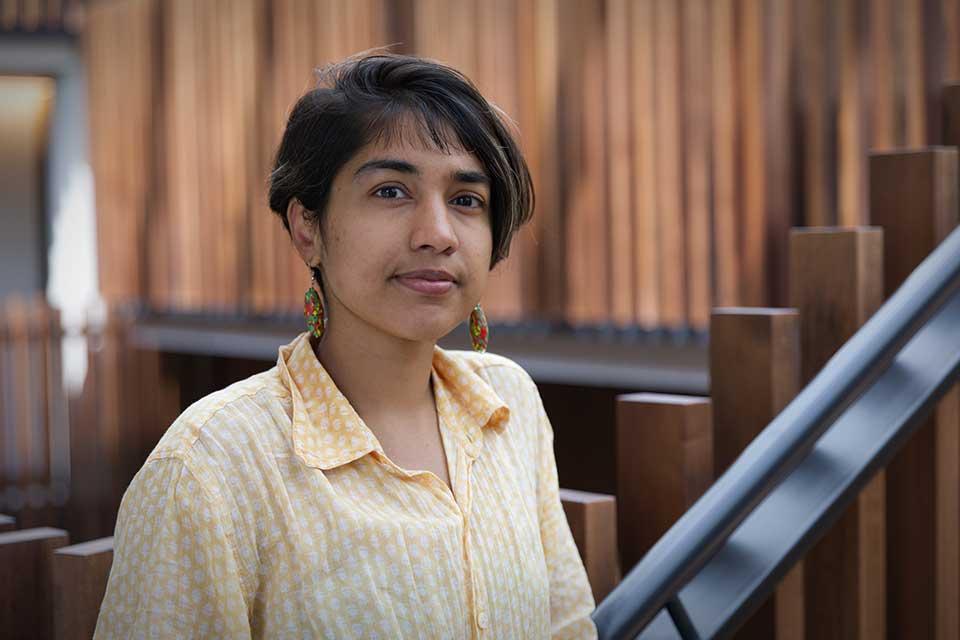
In a new expert commentary for the University of Oxford, AfriClimate AI Research Lead Dr Shruti Nath examines whether AI can help us prepare for a world in which extreme weather is becoming increasingly common. She argues that AI could make forecasting faster, cheaper and more locally tailored, but that significant challenges remain around reliability, extremes and the lack of representative data.
One of those challenges is especially stark in Africa.
Today’s leading AI weather models are trained predominantly on data from observation-rich regions such as North America, Europe and East Asia. Africa is comparatively under-represented, despite facing some of the fastest-rising exposure to climate extremes.
That creates a fundamental problem: the regions that may need better forecasts most urgently are often the regions least represented in the data shaping those forecasts.
This is the challenge behind Forecast4Africa, our programme to explore how global AI weather forecasting models can be adapted and evaluated for African conditions.
We are not interested in simply importing a model and assuming that strong global performance means it will work equally well across the continent. Forecast4Africa is focused on what happens next: benchmarking models against African observations, improving local resolution and relevance, integrating local weather-station data, and developing robust approaches to verification.
And importantly, this is not something that can be solved by AI alone.
Forecast4Africa is being developed around collaboration with African meteorological and research institutions, because building trustworthy forecasting systems for the continent also means building the local expertise, data infrastructure and ownership needed to evaluate and improve them.
As Shruti puts it in her commentary, AI forecasting should be an “information broker rather than an autonomous pilot”, with rigorous evaluation and mechanisms to flag situations where models are operating outside the experience represented in their training data.
For us, this is the bigger question behind Forecast4Africa:
How do we take the extraordinary advances in AI weather forecasting and make them genuinely useful, reliable and trustworthy for Africa?