AfriClimate AI and the Agricultural Research Council launch the ImvulaNet co-design process
As climate variability increases across southern Africa, farmers face growing uncertainty about when to plant, how to manage crops and how to prepare for the season ahead. While advances in artificial intelligence are opening new possibilities for seasonal forecasting, the challenge is ensuring these advances translate into information that people can trust and use.
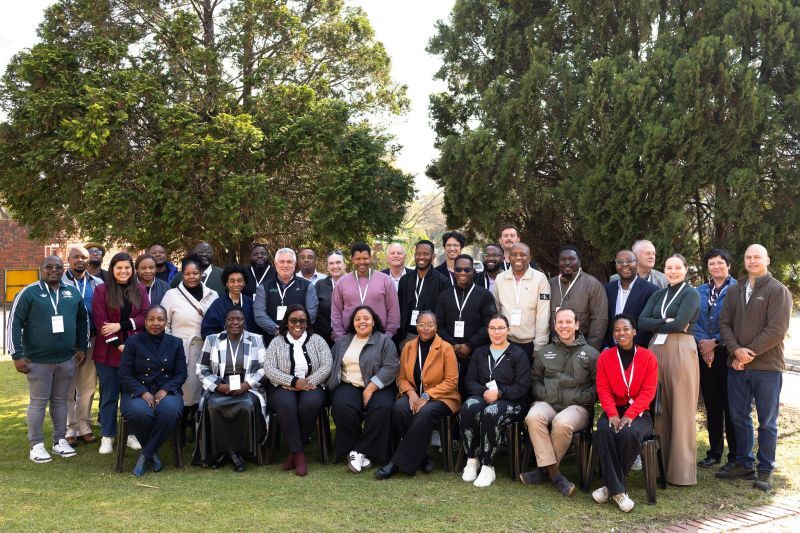
This was the motivation behind the ImvulaNet Inception Workshop, co-hosted by AfriClimate AI and the Agricultural Research Council (ARC). Bringing together meteorologists, agricultural scientists, AI researchers, extension practitioners and private sector partners, the workshop marked the beginning of a collaborative effort to shape the future of seasonal forecasting for South African agriculture.
ImvulaNet is exploring how advances in artificial intelligence can improve the usefulness of seasonal forecasts for agricultural decision-making. By combining AI with meteorological science and a co-design approach with end users, the project aims to develop forecasts that are not only more accurate, but also better aligned with the decisions farmers, extension practitioners and agricultural planners make throughout the season.
The workshop reflected this philosophy from the outset. Rather than starting with technology, participants explored the decisions that seasonal forecasts need to support, and the challenges faced by those who rely on them. The discussions reinforced a central principle of the project: advances in AI will only have real impact if they are developed around the needs of the people who use seasonal forecasts. The value of improved forecasts depends not only on their accuracy, but also on whether they are understandable, trusted and able to support timely, informed decisions throughout the growing season.
Ultimately, the workshop reinforced that developing effective seasonal forecasts is about more than improving AI models. It requires reliable science, meaningful collaboration, clear communication of uncertainty and a deep understanding of how people make decisions.
"Forecast reliability, user risk tolerance, effective communication of uncertainty and close collaboration between climate scientists, agricultural scientists and decision-makers are all essential components of successful climate services."
These principles underpin ImvulaNet's co-design approach.
The ImvulaNet Inception Workshop marks the beginning of a longer co-design process. Over the coming months, AfriClimate AI and its partners will build on the ideas, relationships and priorities established during the workshop as ImvulaNet moves into its next phase. Together, these efforts will help ensure that advances in artificial intelligence translate into seasonal forecasts that are accurate, practical and designed around the needs of South African agriculture.
AfriClimate AI extends its sincere thanks to the Agricultural Research Council for co-hosting the workshop, to LDRI, IDRC and UK International Development for their support of ImvulaNet, and to all participants for contributing their expertise, experience and perspectives.